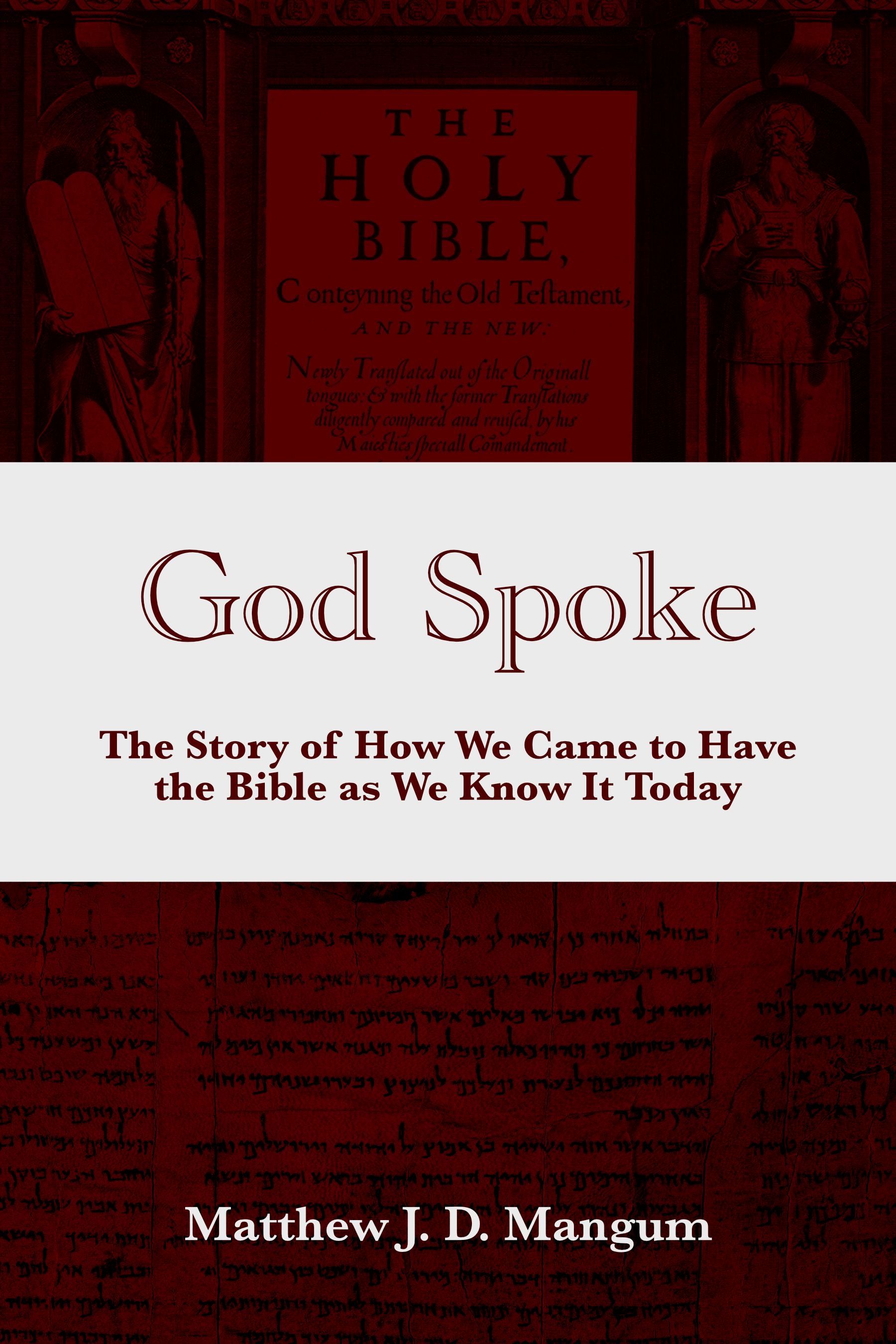
Of all Bible translations, none other has been so influential and so widely used as the King James Version (KJV), also known in England as the Authorized Version (AV). For over 200 years, the KJV served as the sole translation for the English-speaking world and has largely epitomized what we think of when we hear the Bible in English. Its story is fascinating in and of itself, and whole books have been written about it. We tell its story here in brief.
Before the King James Version
The KJV was not the first English Bible; far from it. The 1500s saw a flurry of Bible translation activity. William Tyndale published the first modern English translation of the New Testament in 1525, as well as publishing a revision in 1534. Myles Coverdale followed in 1535 with a revision of Tyndale’s text as well as his translation of the Old Testament drawn from Latin and German translations (he did not know Hebrew). The Matthew Bible was published in 1537 and then the Great Bible was published in 1539. The most popular Bible of the century, the Geneva Bible, was published in 1560, and then the latest official Bible for the Church of England, the Bishops’ Bible, was published in 1568. And this is not to mention the Douay-Rheims Bible, produced by Roman Catholics, which was published in two waves in 1582 (New Testament) and then 1609 (Old Testament).
By the time of the early 1600s, two main English Bibles were in use for English Protestants: the Geneva Bible and the Bishops’ Bible. The Bishops’ Bible was the official Bible for use in the Church of England, but the Geneva Bible had won the hearts and minds of the Bible-reading public, making it more popularly used. Furthermore, the Geneva was recognized to be superior in quality, but due to its notes that were Calvinistic in nature and which were perceived to be opposed to monarchy, it was not favored by the authorities in England.
The Creation of the King James Version
The original impetus for producing a new English Bible version has its roots in the Hampton Court Conference of 1604. Queen Elizabeth had died in 1603, and her successor, King James VI of Scotland, became King James I of England. The accession of the Scottish King James, who had had to support the Presbyterian Scottish Church during his reign over Scotland, presented the Puritans with what they thought would be an opportunity to make their requests known before a king who may be more friendly to their line of thinking than Elizabeth had been. About a thousand Puritan ministers signed a petition, known as the Millenary Petition, calling for further reform in the Church of England. As it turned out, the Puritans were mistaken; James despised Presbyterianism and saw it as a threat to monarchy, and he would be no friend to the Puritan cause. Yet he was stepping in as head of a church that had growing divides within it. Thus one of his first affairs of business as king of England was to call the Hampton Court Conference with various leaders from the Church of England, which was to meet three times over a five-day period. The small Puritan party was led by John Rainolds, while the much larger ecclesiastical party was led by Richard Bancroft, the bishop of London and future Archbishop of Canterbury.
King James apparently gained much enjoyment in toying with the Anglican clergymen and took especial delight in verbally thrashing the Puritans. All of the Puritan petitions were rejected by James, save one, and that one was not even on the books as an official request. During the conference, the Puritan Rainolds, at least in the words of the hostile Toby Matthew, had requested that there be “one only translation of the Bible… declared authentical, and read in church.” Bancroft immediately protested, yet this idea struck James as a worthwhile endeavor. He claimed that he had yet to see “a Bible well translated into English” and thought that of all of the Bible translations in existence, “that of Geneva is the worst.”1 The translation gave James a chance to mollify the Puritans, improve upon the Bishops’ Bible, and provide an alternative to the popular, yet personally despised Geneva Bible.
King James granted this one petition from the Puritans, but the translation would be on terms acceptable to both the king and the established church. As such, fifteen rules were laid down for the translators in how to proceed with the work.2 Some of these rules were simply procedural, such as the first rule, which ordered that “The ordinary Bible read in the Church, commonly called the Bishops’ Bible, to be followed, and as little altered as the Truth of the original will permit.” The new translation was thus to be a revision of the Bishops Bible, and not a completely new translation. The translators were also commissioned to consult other earlier translations: “These translations to be used when they agree better with the Text than the Bishops Bible: Tyndale’s, Matthew’s, Coverdale’s, Whitchurch’s, Geneva” (Rule 14). Two of the rules had especial political and theological implications, ensuring that the new translation was to both the king’s liking and the theology and polity of the Church of England. Rule 2 stated that “The Old Ecclesiastical Words to be kept, viz. the Word Church not to be translated Congregation etc.” There was to be no repeat of Tyndale replacing the old words, and the traditional language accepted by the Church of England was to be respected. Furthermore, Rule 6 ordered that “No Marginal Notes at all to be affixed, but only for the explanation of the Hebrew or Greek Words, which cannot without some circumlocution, so briefly and fitly be expressed in the Text.” Implicitly in view are the notes of the Geneva Bible; this rule would ensure that no potentially subversive or controversial notes would accompany the new translation.
The work of translation was split amongst six different committees, comprising about 54 scholars (the lists do not entirely agree). These men were some of the most educated of their day. The most distinguished of these was Lancelot Andrewes, the dean of Westminster, who would lead the First Westminster Company. He was one of, if not the most learned man of his time, and was said to have mastered at least fifteen languages. Gordon Campbell has called the collective learning of the translators “daunting,” and commented, “it would be difficult now to bring together a group of more than fifty scholars with the range of languages and knowledge of other disciplines that characterized the KJV translators. We may live in a world with more knowledge, but it is populated by people with less knowledge.”3 These companies commenced work in earnest in 1607 and finished it in 1609. From there it went to a revision committee, which worked for about nine months putting the final touches on the translation. By 1611, it was ready for printing. The job was carried out by the king’s printer, Robert Barker.
The preface to the King James Version was written by Miles Smith on behalf of the translators, and in it, we find an elucidation of the principles that they followed and a general defense of the translation. The translators made clear that they were building upon the labors of the past and that “we never thought from the beginning that we should need to make a new translation, nor yet to make of a bad one a good one… but to make a good one better, or out of many good ones, one principal good one.”4 The translators were scrupulous, working slowly and carefully through their work. Not only did they consult the aforementioned earlier English translations, but also translations in other languages, both contemporary and ancient:
Neither did we think much to consult the translators or commentators, Chaldee, Hebrew, Syrian, Greek, or Latin, no, nor the Spanish, French, Italian, or Dutch; neither did we disdain to revise that which we had done, and to bring back to the anvil that which we had hammered: but having and using as great helps as were needful, and fearing no reproach for slowness, nor coveting praise for expedition, we have at the length, through the good hand of the Lord upon us, brought the work to that pass that you see.5
In accordance with Rule 7, the translators set alternate possible translations in the margins, a practice that they saw a need to defend.
Some peradventure would have no variety of senses to be set in the margin, lest the authority of the Scriptures for deciding of controversies by that show of uncertainty should somewhat be shaken. But we hold their judgement not to be so sound in this point. … it hath pleased God in His divine providence here and there to scatter words and sentences of that difficulty and doubtfulness, not in doctrinal points that concern salvation, (for in such it hath been vouched that the Scriptures are plain) but in matters of less moment.6
The translators freely admitted that they were not always sure of certain words, especially in Hebrew, necessitating the marginal notes to make clear where this was the case:
Again, there be many rare names of certain birds, beasts, and precious stones, etc. concerning which the Hebrews themselves are so divided among themselves for judgement, that they may seem to have defined this or that, rather because they would say something, than because they were sure of that which they said, as Saint Jerome somewhere saith of the Septuagint. Now in such a case, doth not a margin do well to admonish the reader to seek further, and not to conclude or dogmatize upon this or that peremptorily? For as it is a fault of incredulity, to doubt of those things that are evident; so to determine of such things as the Spirit of God hath left (even in the judgment of the judicious) questionable, can be no less than presumption. Therefore as Saint Augustine saith, that variety of translations is profitable for the
finding out of the sense of the Scriptures: so diversity of signification and sense in the margin, where the next is not so clear, must needs do good, yea, is necessary, as we are persuaded.7
The ultimate goal of the translation was for it to be understood by all: “we desire that the Scripture may speak like itself, as in the language of Canaan, that it may be understood even of the very vulgar [i.e., the common person].”8 The same driving force that animated Tyndale also animated the translators of the KJV: to produce the Word of God in a language that even the plowboy could understand.

Since the KJV is a revision of earlier translations, one of the interesting side effects is that its language was already somewhat old-fashioned by the time it was published. Alistair McGrath chalks this up to the conservative nature of the revisions that took place during the sixteenth century and the subsequent conservative linguistic nature of the KJV translation guidelines, which was to alter as little as possible its base text of the Bishops’ Bible.9 A striking example of how conservative the language of the KJV can be seen in the consistent usage of “thee,” “thou,” and “thy” as singular second-person pronouns. In the course of time, these pronouns had fallen out of common English usage and were replaced by the more formal and (originally) plural form of address, “you,” which then took on both roles of referring to singular and plural “you.” The “thee” form was largely obsolete in the English language by the time we come to the end of the 1500s, yet it was firmly entrenched in the 1611 translation.
While the King James Version is widely regarded as the greatest translation completed to that point in time, it is the culmination of all that had come before and did not arise in a vacuum. As a revision, it built upon the foundation that earlier translations had laid. As Bruce Metzger summarizes, “A great deal of the praise, therefore, that is given to it belongs to its predecessors. For the idiom and vocabulary, Tyndale deserves the greatest credit; for the melody and harmony, Coverdale; for scholarship and accuracy, the Geneva version.”10 What the KJV translators accomplished was to take the best qualities of the English translation tradition and combine it into a single, principle translation.
The Life of the KJV
While the KJV would come to have complete dominance in the English-speaking world, it was not immediately popular. In McGrath’s words, its publication “caused scarcely a ripple to pass over the face of English society at the time.”11 The Geneva Bible was still the unquestioned favorite of the Bible reading public. Interestingly, many of the Scripture quotations in the preface to the KJV are taken from the Geneva rather than from the new translation. King James’s disdain for the Geneva Bible resulted in a ban on further printings of it in 1616, and this would have in theory meant that the KJV would become the only Bible in use in England, but this was not to be just yet. The Geneva Bible was imported from the continent and continued to be printed surreptitiously by the king’s own printer, Robert Barker, who printed subsequent editions with the fraudulent date of 1599. It would continue to be printed until 1644. Only after the restoration of the monarchy in 1660 would the KJV finally assume its place as the dominant translation in the English-speaking world.12
The KJV was almost superseded between the years of 1642 and 1659 after the Puritans deposed and executed King Charles I and the nation was led by the Puritan-dominated Long Parliament. The new translation was viewed with hostility as a product of the monarchical system that commissioned it, and there were some calls for it to be revised and replaced by a better translation. Yet these calls were never answered and, with the return of the monarchy in 1660, no further challenges were posed to the KJV. The restoration of the king essentially sounded the death knell for the Geneva Bible; in McGrath’s colorful words, England “turned its back on Puritanism as quickly and totally as Germany disowned its Nazi past after the Second World War.”13 The Geneva Bible became associated with sedition in not only the king’s mind but also in the common English consciousness; nobody wanted to be publicly associated with a translation that had been so closely tied to years of Puritan chaos. The Geneva faded from view, and the last translation standing was the KJV.
The KJV went through various printed editions during its history.14 Some of these editions are best known due to unfortunate misprints in them. A 1631 edition, commonly referred to as the Wicked Bible, accidentally omitted the word “not” in Exodus 20:14, such that the text read “Thou shalt commit adultery.” This mistake resulted in a large fine for Robert Barker, who ultimately lived out his final days in debtors’ prison. An edition of 1653 again missed a “not,” with 1 Corinthians 16:9 reading as, “Know ye not that the unrighteous shall inherit the kingdom of God?” The printer’s errors that occurred necessitated various corrected editions, which in turn often introduced new errors. The text was also updated through the years along the lines of spelling standardization and grammatical alterations. The most enduring edition of the KJV is a 1769 edition compiled by Benjamin Blayney, who, in one scholar’s estimation, might possibly be considered “the single most important individual in the history of the KJV, because the twenty-first-century text of the Bible is essentially Blayney’s text.”15 The text of the KJV has largely been stable since this time onward.
Conclusion
For over two hundred years, the KJV was the only Bible in usage in the English-speaking world. It was not until the late nineteenth century that any viable English Bible alternatives existed, and it was not until the twentieth century that the KJV would begin to be overtaken by these other versions. The long-term effect of this dominance means that the language of the KJV has shaped our collective Christian imaginations. It became not just a translation of the Bible, but it became the Bible for the English-speaking world.
Adapted from “Early English Bible Translations” in God Spoke: The Story of How We Came to Have the Bible as We Know It Today.
Notes
- Alister McGrath, In the Beginning: The Story of the King James Bible and How It Changed a Nation, a Language, and a Culture (New York: Doubleday, 2001), 162. ↩︎
- The text of all fifteen rules may be found in Records of the English Bible: The Documents Relating to the Translation and Publication of the Bible in English, 1525–1611, ed. Alfred W. Pollard (London: Oxford University Press, 1911). ↩︎
- Gordon Campbell, Bible: The Story of the King James Version 1611–2011 (New York: Oxford University Press, 2010), 55. ↩︎
- “Preface to the Authorised (King James) Version, 1611,” in Bray, Translating the Bible, 228. A modernized version of the preface may be found in Joshua Barzon, The Forgotten Preface: Surprising Insights on the Translation Philosophy of the King James Translators (Joshua Barzon, 2022), 59–95. ↩︎
- “Preface to the Authorised (King James) Version,” in Bray, Translating the Bible, 230–231. ↩︎
- “Preface to the Authorised (King James) Version,” in Bray, Translating the Bible, 231. ↩︎
- “Preface to the Authorised (King James) Version,” in Bray, Translating the Bible, 232. ↩︎
- “Preface to the Authorised (King James) Version,” in Bray, Translating the Bible, 234. ↩︎
- McGrath, In the Beginning, 269. ↩︎
- Bruce M. Metzger, The Bible in Translation: Ancient and English Versions (Grand Rapids, MI: Baker Academic, 2001), 76–77. ↩︎
- McGrath, In the Beginning, 278. ↩︎
- Adam Nicolson, God’s Secretaries: The Making of the King James Bible (New York: HarperCollins, 2003), 228–229. ↩︎
- McGrath, In the Beginning, 289. ↩︎
- For a comprehensive accounting of the various editions of the KJV, see David Norton, A Textual History of the King James Bible (Cambridge: Cambridge University Press, 2005), 46–127. ↩︎
- Campbell, Bible, 136. ↩︎