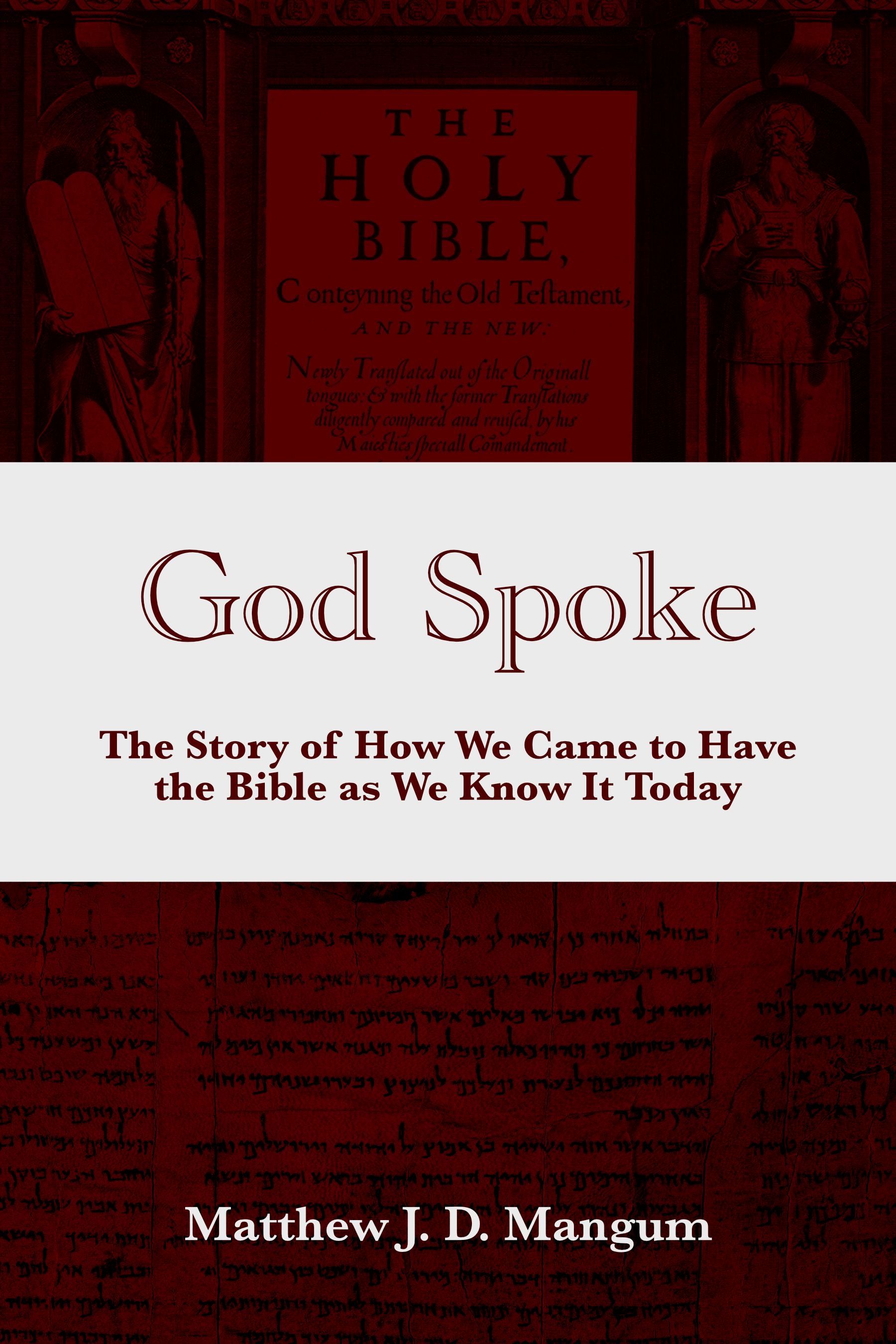
While going through the editing and revising process of writing my book, I made what was—at least to me—a very exciting discovery. I found the original source of a famous quote from John Wycliffe. Not only that, I found that it was spurious.
The famous quote is as follows:
Holy Scripture is the preeminent authority for every Christian, and the rule of faith and of all human perfection.
This quotation is often used to summarize Wycliffe’s view of Scripture and has been cited for decades. Not only can you find it all over random articles on the internet, but you might find it in more reputable locations like Christianity Today1 or even Wycliffe Bible Translators.2 I was going to use the quote myself in my book to describe Wycliffe’s convictions regarding Scripture’s authority. Yet, despite the quote’s ubiquity, I could not find the original source for months. But find it I did. And it turns out that the quote is not truly from Wycliffe.
The Origin and Spread of the Quote
I ultimately found the original source of the quote in the 1911 critical edition of De Veritate Sacrae Scripturae (which is completely in Latin, aside from the introduction). Rudolf Buddensieg, the editor of the critical text, made this comment in his introduction:
To this train of thought, the outcome of mediaeval scholasticism, Wyclif opposes his positive thesis of the incomparable value of the lex dei: the salvation of the believer is contained in the Bible; the Bible is the foundation of the catholic faith and the standard by which to judge heresy. His new unheard-of assertion: Scriptura sacra est precipua autoritas cuilibet cristiano et regula fidei et tocius perfeccionis humane, is, as far as I see, the gist of his investigations. The knowledge of Holy Scripture is necessary for salvation and no human book that differs from it has any pretensions to authority.3
That Latin passage translates to the oft-quoted statement attributed to Wycliffe. At first glance, it appears that Buddensieg is quoting Wycliffe directly. But if you take a look at his footnote, you will see that he is actually summarizing Wycliffe using language drawn from several parts of De Veritate Sacrae Scripturae.4 Furthermore, a search of De Veritate Sacrae Scripturae for the quote turns up no exact matches, only similar phraseology. Wycliffe himself never made any statement so succinct. Buddensieg crafted a synthetic Latin summary of Wyclifffe, but he did not truly quote Wycliffe.
The earliest English source I could find for the citation was Volume 14 of The Library of Christian Classics, Advocates of Reform: From Wyclif to Erasmus, published in 1953. This volume contains a couple of Wycliffe’s writings and an introductory biographical sketch of the man himself. The editor of the volume, Matthew Spinka, made these comments concerning Wycliffe’s doctrine of Scripture:
The basic principle upon which he sought to ground his reform was the supreme authority of the Scriptures. This doctrine, which more than anything else links him with the Reformation, was carefully worked out in De veritate sacrae Scripturae (On the Truth of the Holy Scriptures), published in the very year in which the schism broke out. Wyclif asserts and defends therein the absolute superiority of the Scriptural doctrine over scholastic theology or the current assertion of papal supremacy in all matters of faith and practice. For him, “Holy Scripture is the highest authority for every Christian and the standard of faith and of all human perfection.” The Bible alone is the supreme organ of divine revelation; the Church’s tradition, pronouncements of the councils, papal decrees, and all other expositions of Christian doctrine must be tested on the Scriptural touchstone. All truth is contained in the Scriptures.5
Spinka cites Buddensieg’s introduction, but, if I am not mistaken, he had misunderstood Buddensieg’s summary as a true quotation of Wycliffe. While I cannot prove it at this point, my suspicion is that Spinka set a precedent for summarizing Wycliffe’s doctrine of Scripture in this manner.
Fast forward a few decades and we find the source of the most common translation of the supposed quote from Wycliffe. That source is a 1983 article of Christian History entitled, “Why Wycliffe Translated the Bible Into English.” The article opens succinctly:
For John Wycliffe, the Bible became the sole authority for all of life. He wrote:
“Holy Scripture is the preeminent authority for every Christian, and the rule of faith and of all human perfection.”6
The vast majority of the Wycliffe citations I have found follow this form and, whether acknowledged or not, ostensibly trace back to this article. And since this article includes several other (uncited) quotations of Wycliffe, it appears to be a very common source that people rely upon.
Why Does It Matter?
My realization of the true origins of the Wycliffe “quote” came with both a tinge of disappointment and exhilaration. Disappointment because I now knew Wycliffe did not say those words, thus I could no longer summarize him in his own words so succinctly. Exhilaration because I made a discovery that it seems not many have made in recent memory. For me, finally determining where the Wycliffe “quote” came from was like unearthing buried treasure. And a buried treasure that no one was looking for at that!
Aside from the excitement I derived from my discovery, I think there are a couple lessons we can learn.
First is the importance of primary sources. It can be very easy to repeat a quote that you found cited in a book or on the web, especially if it is quoted by a reputable source. Even experts can sometimes be too trusting. Don’t be another link in the chain of “as cited in…” quotations. Not relying upon primary sources is how spurious quotes spread far and wide.
Second, we should be concerned with accuracy. By all accounts, the quotation is a fair summary of Wycliffe’s beliefs about the authority of Scripture. But, because Wycliffe did not actually say these words, we should stop citing them as if he did. Honesty demands that we represent our sources accurately.
Finding that a common quote is spurious, especially one that isn’t necessarily an inaccurate summary of Wycliffe’s convictions, might not seem all that important. And it probably isn’t in the grand scheme of things. But I was intrigued by the discovery and was reminded again of the importance of double-checking our sources. So if you happen to be doing some research into Wycliffe, or you just find things of this sort to be as interesting as I do, I hope that this article is beneficial to you.
Notes
- “From the Archives: Why Wycliffe Translated the Bible Into English,” Christianity Today, https://www.christianitytoday.com/1983/07/from-archives-why-wycliffe-translated-bible-into-english/. ↩︎
- “John Wycliffe: His Story,” Wycliffe Bible Translators, accessed 6 February 2025, https://wycliffe.org.uk/john-wycliffe-700/john-wycliffe-his-story ↩︎
- John Wyclif, De Veritate Sacrae Scripturae: Now First Edited from the Manuscripts with Critical and Historical Notes, Vol. 1., ed. Rudolf Buddensieg (London: Trübner & Co., 1905), xxv. I have italicized the Latin. ↩︎
- Buddensieg’s footnote is as follows: ” I 39; 52; 276; 399; comp. De Civ. Dom. III 622—623.” ↩︎
- Matthew Spinka, “John Wyclif, Advocate of Reform,” in Advocates of Reform: From Wyclif to Erasmus, ed. Matthew Spinka, vol. XIV, The Library of Christian Classics (Philadelphia: The Westminster Press, 1953), 26–27. I have italicized the quote in question. ↩︎
- “Why Wycliffe Translated the Bible Into English,” Christian History 3 (1983): 26. Available online at https://christianhistoryinstitute.org/magazine/article/archives-why-wycliffe-translated. ↩︎